Emergency Dentist Plano, TX for Unexpected Oral Swelling


Oral swelling has a way of changing the day fast. A mild ache in the morning can turn into a tight, throbbing jaw by afternoon. A tender gumline can suddenly make it hard to chew, talk, or even swallow comfortably. When that swelling appears without warning, most people are not thinking about dental terminology. They are thinking, "Is this serious, and where do I go right now?"
That question matters because swelling in the mouth is not one single problem. It can come from an infected tooth, a gum abscess, a cracked crown, an erupting wisdom tooth, trauma, an allergic reaction, or irritation after dental work. Some causes are uncomfortable but manageable for a few hours. Others need same-day treatment. A smaller group crosses the line into a medical emergency because the swelling can affect breathing or spread into deeper tissues.
If you are looking for an Emergency dentist Plano, TX residents can call when facial or oral swelling appears unexpectedly, it helps to know what dentists look for first: the source of the swelling, how quickly it developed, whether pain is sharp or pressure-like, whether you have fever, and whether your tongue, throat, or airway feel involved. Those details shape the next step.
Why oral swelling should not be ignored
Swelling is the body's signal that something is wrong. In the mouth, it often means inflammation, infection, or injury. The challenge is that the mouth sits in a very small, very busy space. Teeth, gums, bone, salivary glands, cheeks, tongue, sinuses, and jaw muscles all share close quarters. A problem in one area can quickly affect another.
A localized swelling near one tooth may begin as a pocket of infection around the root or gum. At first, it may feel like a sore bump or pressure when biting. Left alone, that infection can push outward into the gum or cheek. Sometimes it drains and the pressure eases for a while, which makes people think it is improving. In practice, drainage does not mean the source is gone. It often means the infection found a path.
Dentists take this seriously because untreated dental infections can spread beyond the tooth. That does not happen in every case, and there is no reason to panic at the first sign of gum irritation. Still, when the swelling is new, painful, hot to the touch, or paired with fever or foul-tasting drainage, waiting several days usually makes treatment more complicated, not less.
What oral swelling can look and feel like
Not every patient describes swelling the same way. Some notice a visible puffiness in the cheek. Others feel that their bite is "off," as if one side of the mouth is suddenly thicker. A few say the first clue was a strange pressure under the jaw or behind the lip.
Common patterns include swelling along the gumline, puffiness around a single tooth, a lump in the vestibule between the gums and cheek, tenderness near a wisdom tooth, or diffuse swelling of the cheek or lower face. The texture matters too. Soft, fluctuant swelling can suggest fluid or pus. Firm swelling can point to deeper inflammation, trauma, or gland involvement.
Pain can range from barely noticeable to relentless. The more useful clues are often the associated symptoms. A bad taste in the mouth may indicate drainage. Sensitivity to pressure may suggest an abscessed tooth. Difficulty fully opening the mouth can happen with infection around lower back teeth, especially wisdom teeth. Swelling beneath the tongue or under the jaw raises the stakes because of the structures in that area.
The most common dental causes
In day-to-day practice, several causes show up again and again.
A tooth abscess is one of the biggest reasons patients seek urgent care. This starts when bacteria reach the pulp, the living tissue inside the tooth, often through deep decay, a crack, or old dental work that has failed. The infection can move through the root tip into the surrounding bone and soft tissue. Patients often report throbbing pain, pain when chewing, temperature sensitivity, and facial swelling that seems to worsen over hours.
Gum abscesses are slightly different. These involve the tissues around the tooth rather than the nerve inside it. Food impaction, periodontal disease, or a foreign body trapped under the gum can cause a very sore, swollen area. Sometimes the tooth itself is alive and not the primary issue.
Partially erupted wisdom teeth are another frequent culprit. When a flap of gum sits over part of the tooth, bacteria and debris can collect underneath. The result can be painful swelling, bad breath, jaw stiffness, and tenderness at the back of the mouth. This is especially common in younger adults.
Cracked teeth deserve mention because they can fool people. A crack may not always produce dramatic pain at first. Then bacteria gain access, inflammation builds, and swelling appears after what seemed like a minor dental annoyance.
Salivary gland problems, trauma from sports or falls, and irritation from ill-fitting appliances can also produce swelling. These may not always be emergencies, but they still need a clear diagnosis. Guessing at home rarely works well.
When swelling belongs in the emergency room, not just the dental office
Most dental swellings should be assessed by a dentist promptly, often the same day. A smaller set of symptoms means you should seek emergency medical care right away, even if you are also trying to reach a dental office.
- Trouble breathing, noisy breathing, or a sensation that your throat is closing
- Difficulty swallowing saliva, drooling, or rapidly worsening tongue or floor-of-mouth swelling
- Fever with spreading facial swelling or marked weakness
- Swelling that extends toward the eye or significantly affects vision
- Inability to open the mouth, combined with severe pain or worsening swelling under the jaw
These signs raise concern for a deeper infection or airway risk. A dental office may still be involved after you are stabilized, but the first priority is medical safety.
What an emergency dentist evaluates first
When a patient calls about swelling, an experienced front desk or triage team usually asks focused questions. When did it start? Is it getting larger? Do you have pain, fever, drainage, or trouble swallowing? Did a filling break, a crown come off, or did you injure the area? Can you point to one tooth, or does the whole side of the face feel swollen?
At the appointment, the dentist is trying to answer three practical questions. First, where is the source? Second, how extensive is it? Third, what will bring the safest relief today?
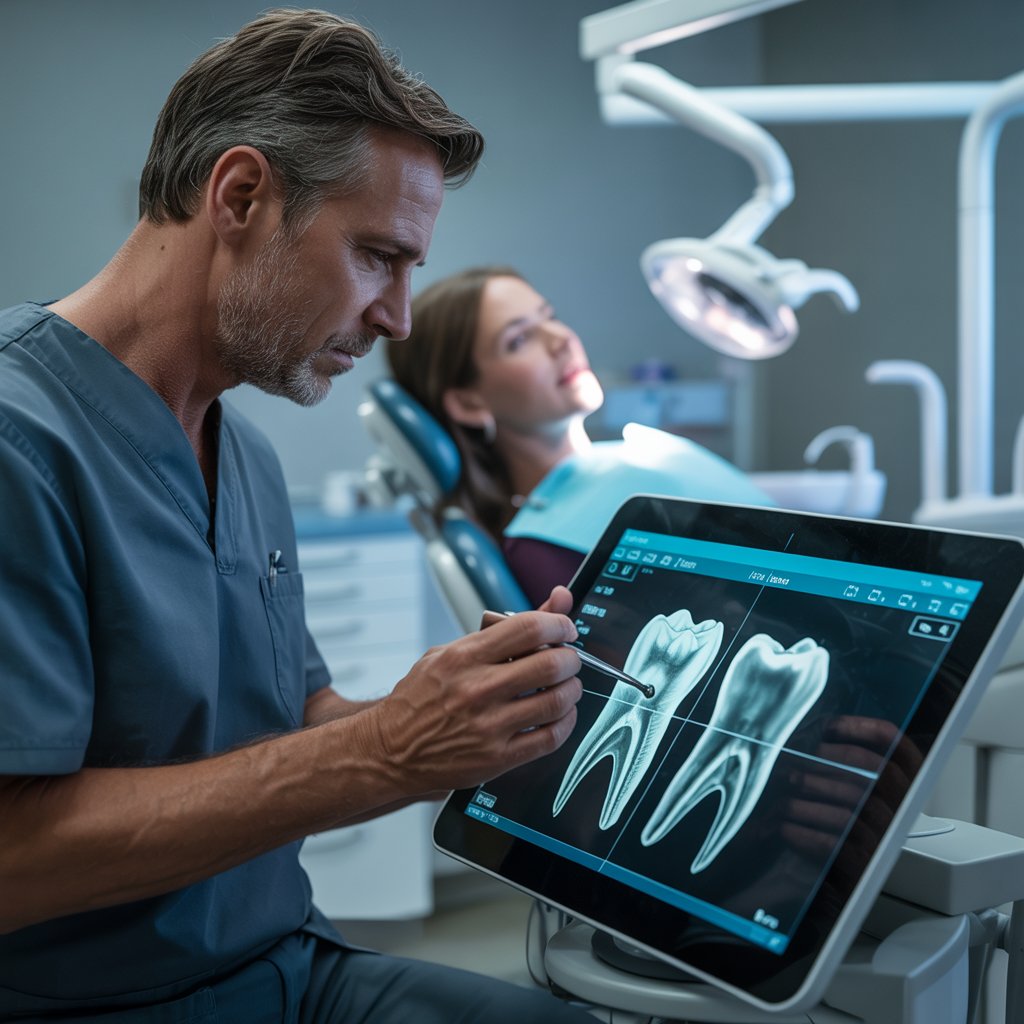
That work often includes an exam, gentle palpation, temperature or percussion testing on nearby teeth, and dental X-rays. The X-ray does not show every soft tissue detail, but it can reveal decay, bone loss, infections at the root tip, impacted teeth, and failed restorations. Sometimes the source is obvious. Sometimes it takes judgment, Emergency dentist Plano, TX vitalitydentaldfw.com especially when pain radiates or several teeth have old dental work.
The treatment depends on the cause. If the swelling is from an abscessed tooth, the dentist may recommend root canal treatment, drainage, extraction, or a staged plan that begins with relieving pressure and controlling infection. If the swelling is due to gum infection, periodontal cleaning or local drainage may be the first step. If a wisdom tooth is the problem, irrigation and infection control may come first, followed by extraction planning once the acute episode settles.
Antibiotics are sometimes part of the plan, but they are not a stand-alone fix for many dental infections. This is an important point patients often do not hear soon enough. Antibiotics can help reduce bacterial spread and calm surrounding tissue, but if the source remains inside a dead tooth or trapped beneath gum tissue, the swelling often returns. Definitive dental treatment is what solves the problem.
What to do while you wait to be seen
The period between noticing swelling and getting into the office can feel much longer than it is. There are a few reasonable steps that help, and a few common mistakes that make things worse.
- Call a dental office as soon as you notice swelling that is new, painful, or growing
- Use a cold compress on the outside of the face in short intervals if the area feels inflamed
- Take over-the-counter pain medication only as directed on the label, if it is safe for you medically
- Rinse gently with warm salt water if it feels soothing, but do not rinse aggressively
- Stay upright rather than lying flat, especially if pressure increases when you recline
Avoid placing aspirin directly on the gums. People still do this, and it can burn the tissue. Avoid pressing on the swelling to "drain it." Avoid heat if the area feels actively infected or is enlarging, because heat can intensify throbbing for some patients. Most of all, do not assume the pain has to be extreme for the problem to be urgent. Some significant infections produce more pressure than pain.
What treatment may look like the same day
Same-day care for oral swelling is not always dramatic, but it is often very effective. Patients tend to imagine that every urgent visit ends in extraction. That is not the case. The dentist's goal is to stop progression, relieve pressure, identify the source, and preserve healthy structures whenever possible.
If a tooth can be saved, root canal therapy may be the right answer. For the right tooth, in the right condition, this removes infected tissue from within the canals and seals the space. Many people feel much better once pressure is relieved, even before complete healing occurs.
If the tooth is severely fractured, deeply decayed below the gumline, or has very poor support, extraction may be the safer option. That is not a failure. It is a judgment call based on predictability. Keeping a tooth at all costs can lead to repeated infection, more expense, and more time in pain.
Drainage may be performed when a localized abscess is present. That can provide substantial relief because pressure inside confined tissue is often what makes the pain feel relentless. If a restoration has failed or food is packed under the gum, a targeted procedure may solve the issue without more extensive treatment.
There are trade-offs in urgent care. Sometimes the best first visit is focused on controlling the emergency, with definitive restorative work scheduled soon after. That is common when swelling limits access, when numbness may be harder to achieve around infected tissue, or when the patient arrives late in the day with a complex problem. A careful temporary plan is still good care if it is aimed at a sound final result.
A few situations that confuse patients
One common situation is painless swelling. People assume that if it does not hurt much, it cannot be serious. In dentistry, that is not always true. A chronic infection can drain enough to reduce pain while still damaging bone around the tooth.
Another confusing scenario is swelling that improves after antibiotics from urgent care, then returns a few weeks later. That usually means the medication suppressed the infection but did not remove the source. The tooth, the deep pocket, or the impacted area still needs direct treatment.
There is also post-procedure swelling. Mild swelling after an extraction, implant placement, or difficult root canal can be normal for a short period. The line between expected swelling and a problem depends on timing and intensity. Swelling that peaks within the first two to three days then gradually eases is often routine. Swelling that starts later, worsens steadily, comes with fever, or causes foul drainage deserves a prompt call.
Children present their own wrinkles. A child with facial swelling from a tooth needs timely evaluation, even if they seem calm and playful. Kids can compensate well until they suddenly do not. The source may be a decayed baby tooth, trauma, or an erupting permanent tooth with a separate gum issue. Pediatric swelling is not something to watch casually for several days.
Why speed matters, even when the problem seems manageable
Dentists learn over time that delay changes the shape of treatment. A tooth that could have been treated with a root canal on Monday may become non-restorable by Friday if decay, fracture, or infection progresses. A small gum abscess can become a more diffuse facial swelling after a weekend of self-treatment. Faster evaluation often means simpler care, less pain, and lower cost.
That matters in a practical city schedule. Plano patients are often balancing work, school pickup, business travel, and family obligations. It is tempting to push dental swelling into the "I will deal with it after this week" category. The mouth rarely cooperates with that plan. Problems do not usually stabilize because the calendar is crowded.
Finding an Emergency dentist Plano, TX families can reach quickly is valuable because timely diagnosis prevents a lot of unnecessary suffering. The goal is not just immediate pain relief. It is preventing the late-night escalation that sends someone from a manageable dental visit to the emergency room.
What to expect when you call for urgent dental care in Plano
A well-run emergency dental practice does not treat swelling as a routine scheduling matter. The team should ask enough questions to gauge urgency and direct you appropriately. If you mention trouble breathing, swallowing difficulty, or fast-spreading swelling, they should tell you to seek medical emergency care immediately. If the symptoms sound dental but urgent, they should aim to see you as soon as possible or guide you to the nearest available help.
Bring a list of medications, your allergy history, and a summary of relevant medical conditions. If you have had recent dental treatment elsewhere, any X-rays or notes can help, but do not delay care if you do not have them. If swelling affects your ability to eat, drink, or sleep, say that clearly when you call. Good triage depends on clear information.
The role of judgment in saving a tooth versus removing it
Patients often want a black-and-white answer, save it or pull it. Real cases are not always that tidy. Suppose a molar has a large old filling, a crack extending below the gumline on one side, and a significant abscess. Technically, there may be a heroic path involving root canal treatment, crown lengthening, a crown, and close monitoring. In selected cases, that can work. In many others, it asks the patient to invest heavily in a tooth with guarded long-term odds.
By contrast, a heavily infected tooth with solid remaining structure, no vertical root fracture, and enough surrounding bone may respond very well to root canal therapy and proper restoration. That is why a good emergency visit is not just about stopping pain. It is about honest judgment. Patients need to know not only what can be done, but what is likely to hold up.
Aftercare and preventing the next emergency
Once the immediate swelling is under control, prevention becomes practical again. Many urgent dental visits grow out of small problems that were easy to miss, a cavity beneath an old crown, gum disease that was not painful, a chipped tooth that was never repaired, a wisdom tooth that flared on and off for years.
Routine exams and X-rays catch a surprising number of these issues before they become emergencies. So do professional cleanings, especially for patients who trap plaque around back molars or have a history of periodontal pockets. Night guards help patients whose grinding causes cracks over time. Replacing failing restorations before bacteria work underneath them can spare a lot of trouble.
There is also the very human side of prevention. People delay care because they are busy, anxious, or worried about cost. Those concerns are real. Yet emergency treatment is usually more stressful and often more expensive than planned care. A conversation with a trusted dental office about priorities, timelines, and payment options is often easier than people expect.
The bottom line when your mouth suddenly swells
Unexpected oral swelling should never be brushed off as "just a toothache." Sometimes it is a minor, localized problem. Sometimes it is the first sign of a spreading infection. The safest response is to assess it promptly, watch for red-flag symptoms, and get the right level of care without delay.
If you need an Emergency dentist Plano, TX patients can rely on for sudden swelling, look for a practice that understands urgency, evaluates the source carefully, and explains the treatment decision with clarity. Good emergency dentistry is not only about acting fast. It is about knowing when a problem can be stabilized, when a tooth can be saved, and when a bigger medical response is necessary.
Pain and swelling in the mouth can feel frightening because they change so quickly. The good news is that once the source is identified, relief often comes faster than patients expect. The first step is simply taking the swelling seriously and getting it examined.
Vitality Dental
1220 Coit Rd # 106, Plano, TX 75075, United States
+1 972-645-4100
FAQ About Emergency dentist Plano, TX
Will the ER do anything for dental pain?
An emergency department can assess urgent symptoms and provide medical stabilization. Definitive treatment of the tooth usually requires a dentist. Seek emergency medical care for breathing or swallowing difficulty, uncontrolled bleeding, or serious facial injury.
What to do if I have a dental emergency in the middle of the night?
Contact a dentist or after-hours dental service promptly for guidance. If a permanent tooth is knocked out, keep it moist in milk while seeking immediate care. If symptoms suggest a medical emergency, go to an emergency department.
What qualifies as a dental emergency?
A knocked-out permanent tooth, severe or persistent tooth pain, a significant dental injury, or swelling may require urgent dental assessment. Call a dentist to describe the symptoms and determine timing. Uncontrolled bleeding or difficulty breathing or swallowing requires emergency medical care.